A new home and refuge for frogs and wildlife is taking shape on the banks of Flooding Creek near Sale as part of the Love Our Lakes program.
When Wellington Shire Council saw the possibility of transforming a bare block of land on the banks of Flooding Creek into a wildlife refuge, they had bringing endangered Growling Grass Frogs back at the top of mind.
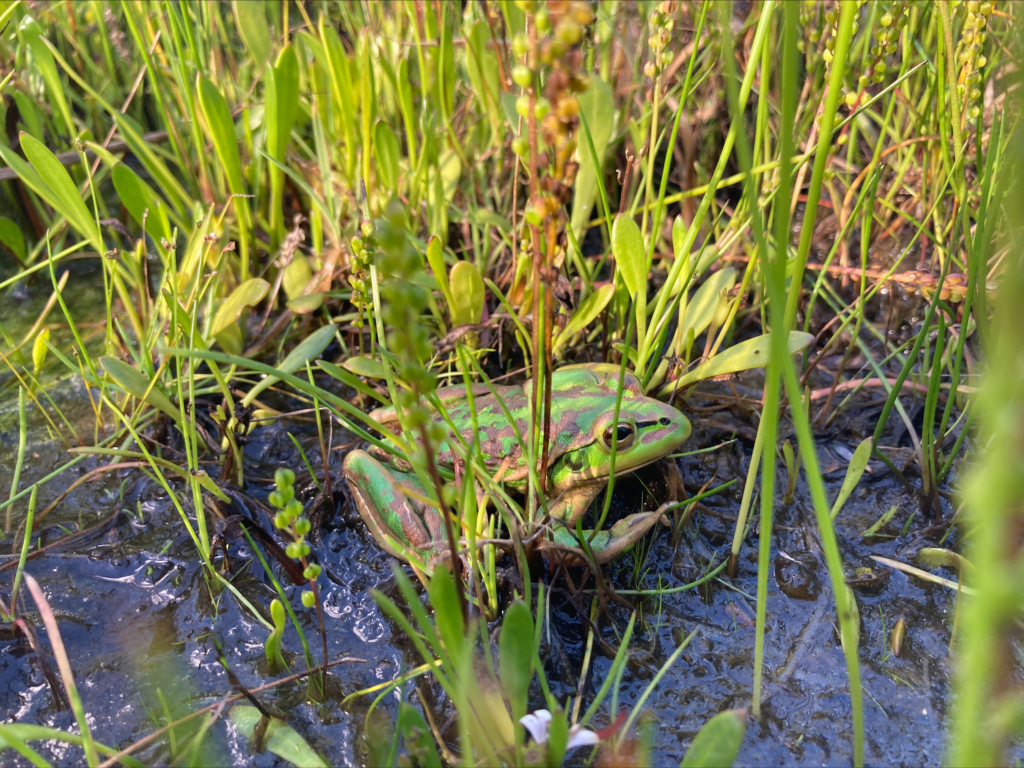
“There are no Growling Grass Frogs here yet, but they have been recorded close by,” said Justin Gorwell, Land and Natural Resources Coordinator for Wellington Shire Council who is leading the Flooding and Lavers creek rehabilitation project.
The team designed the site for frogs and incorporated advice from ‘frog guru’ Martin Potts from Greening Australia who has created a series of frog bogs on a major scale near Lake Wellington, also part of the Love Our Lakes program.
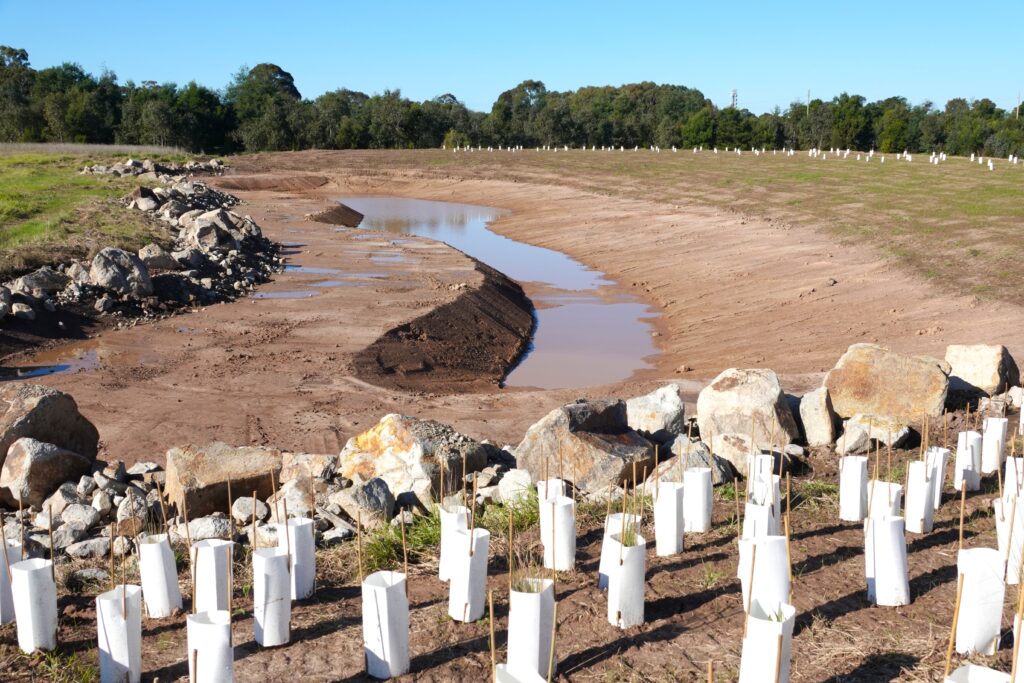
Justin and team have totally transformed the 8,200 square metre block of bare land. They excavated a 1,490 square metre wetland of varying depths and carefully placed rocks on the northern edge along with habitat logs and water plants such as combungi, water ribbons and common spike rush – everything frogs love.
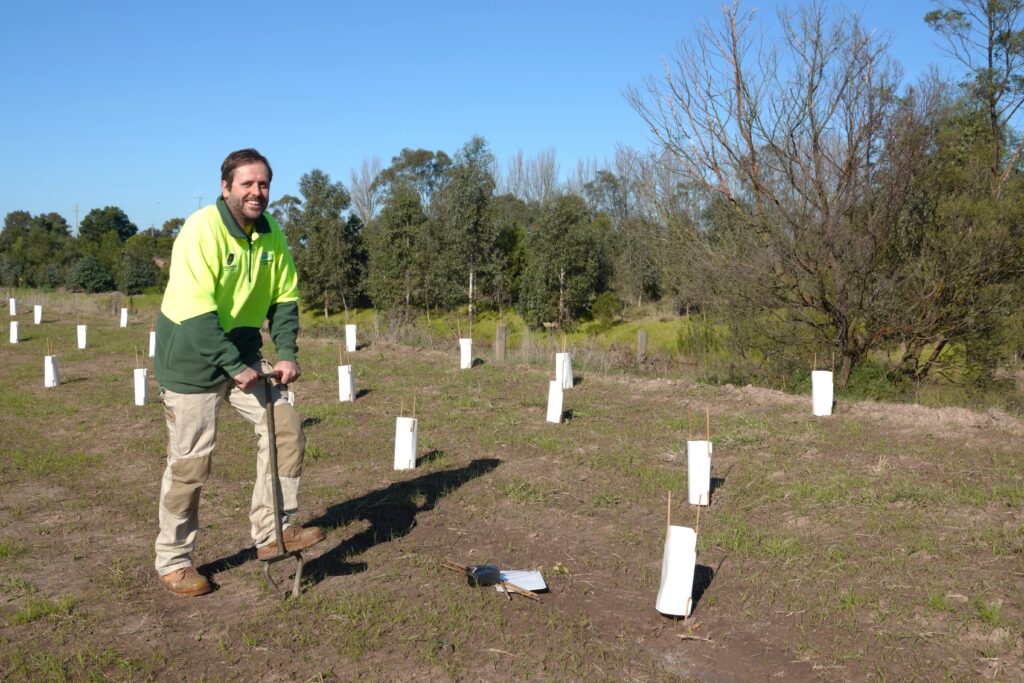
Across the site, Justin and volunteers have so far planted 300 of the approximately 5,000 that will restore and transform the area. Trees such as River Red Gums and Swamp Gums and a range of swamp and grassland vegetation that would have once grown in the area make up the local native mix.
Flooding Creek is a key tributary of the Carran Carran (Thomson River) which flows into Sale Common – one of two freshwater wetlands in the Gippsland Lakes Ramsar Site. The freshwater wetland provides important habitat for threatened species including waterbirds and frogs and the project will add to this chain of freshwater wetlands to help future proof the Lakes.
“In dry weather, the new wetland will remain wet and act as a refuge for plants and wildlife. I’m looking forward to Spring and listening to the frog calls – I really hope we get Growlers here,” concluded Justin.
Home to the smallest of fish through to the largest of birds, Gippsland Lakes on Gunaikurnai Country covers 60,000 hectares and are home to around 400 indigenous plants, 300 native wildlife species and are recognised as a feeding ground for migratory birds that travel from as far away as Siberia. That is why they are one of 67 wetlands in Australia listed under the Convention on Wetlands of International Importance (Ramsar Convention).