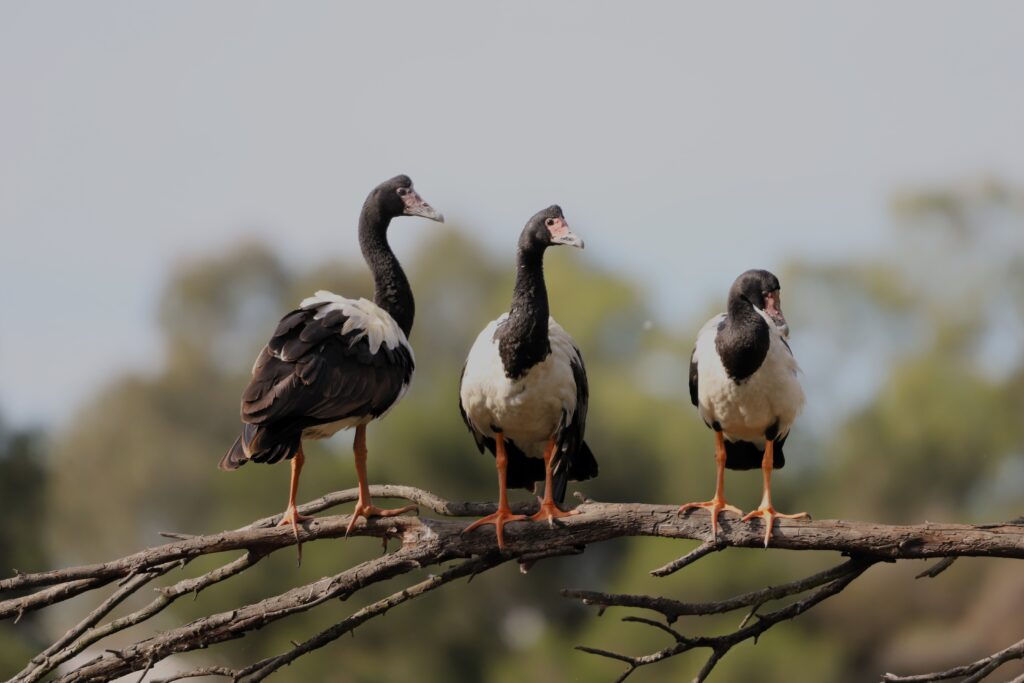
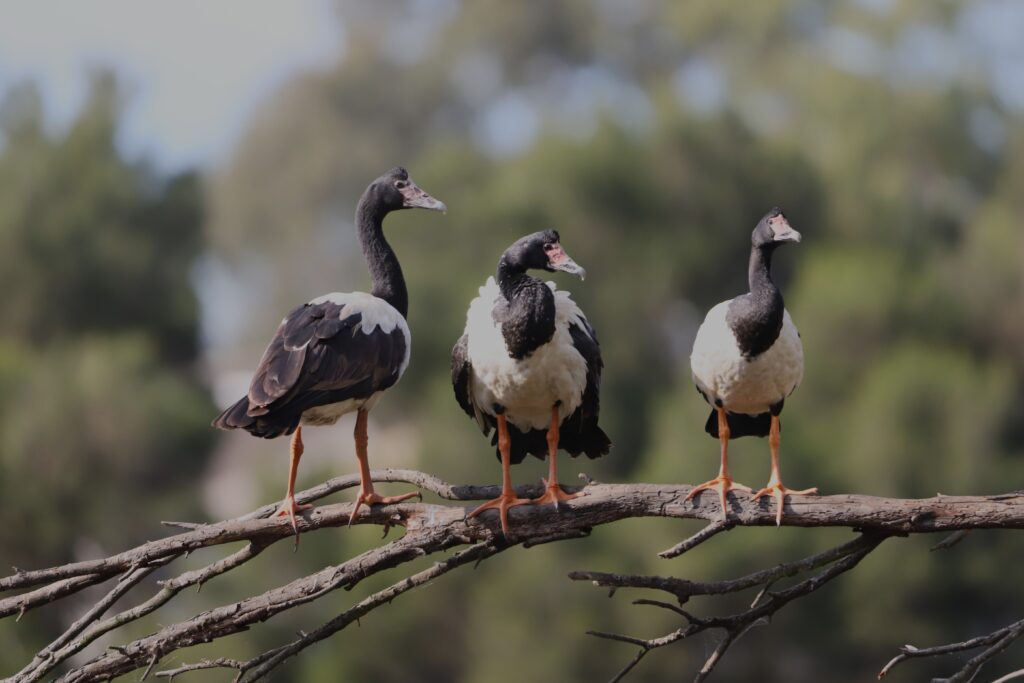
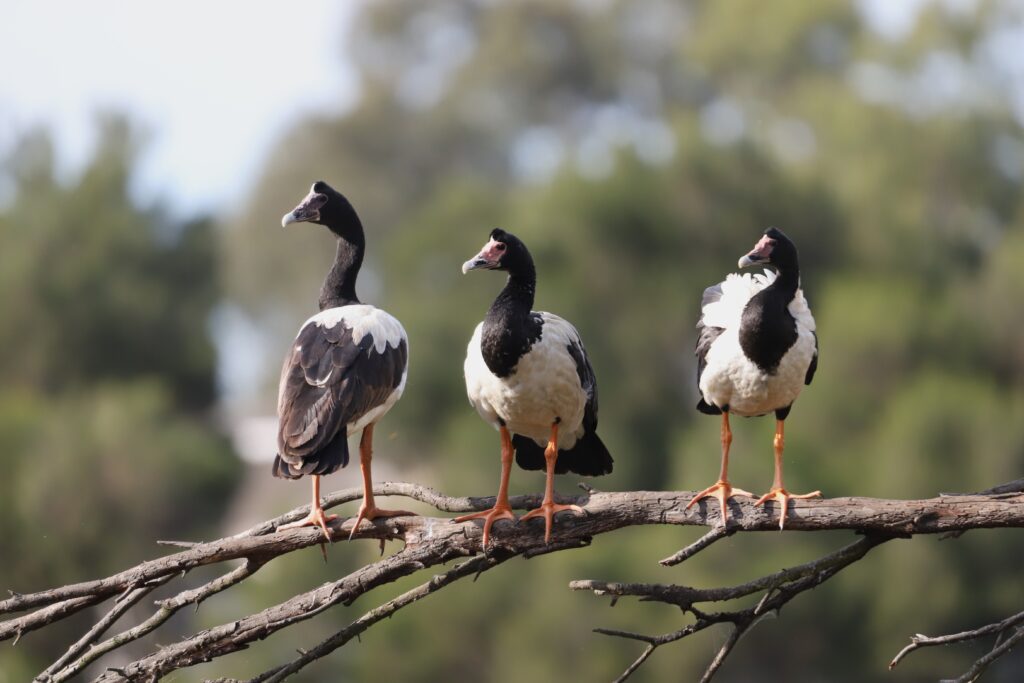
For a second year in a row, Magpie Geese have returned to the Gippsland Lakes catchment being sighted again around Bairnsdale.
“We were excited about the sightings of these birds last year and thought it may be a one off, but to see them back again is very exciting,” said Sean Phillipson, Senior NRM Advisor for East Gippsland Catchment Management Authority.
The Bairnsdale birds are thought to be juveniles and using the area as a refuge. Magpie Geese are found on floodplains and in freshwater wetlands areas across coastal northern and eastern Australia. The geese were once widespread across freshwater wetlands of Gippsland and Victoria but historic over-hunting and draining of wetlands has led to these birds being listed as vulnerable in Victora.
“This year we have recorded three birds in the group. Magpie Geese often form breeding groups of three – two females and one male so this may be the case with this group which is encouraging.”
Magpie Geese need freshwater wetlands and aquatic plants to survive. It is hoped that works through the Love Our Lakes program to restore wetlands and reduce predators is contributing to the comeback of this special species.
“The birds’ return demonstrates that wetlands and plants around the Lakes are acting as a refuge and how important the right habitat can be for wildlife – no matter how small.”
“These uncommon visitors are something we can all celebrate and are a result of the combined effort to enhance and protect the health of the wetlands around the Lakes,” concluded Mr Phillipson.
You can help
- Magpie Geese are large black and white birds with a red beak. If you see any Magpie Geese, we would love you to log the sighting with BirdData either online or via the App.
Home to the smallest of fish through to the largest of birds, Gippsland Lakes on Gunaikurnai Country covers 60,000 hectares and are home to around 400 indigenous plants, 300 native wildlife species and are recognised as a feeding ground for migratory birds that travel from as far away as Siberia. That is why they are one of 67 wetlands in Australia listed under the Convention on Wetlands of International Importance (Ramsar Convention).